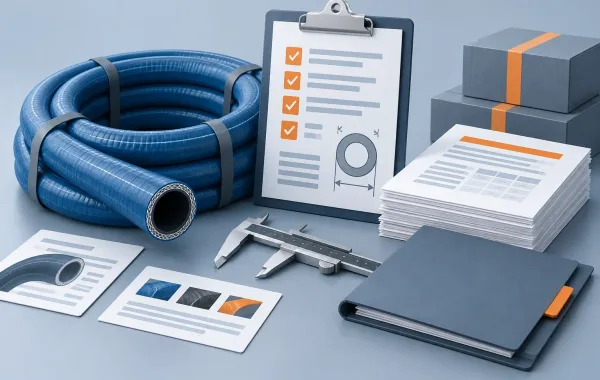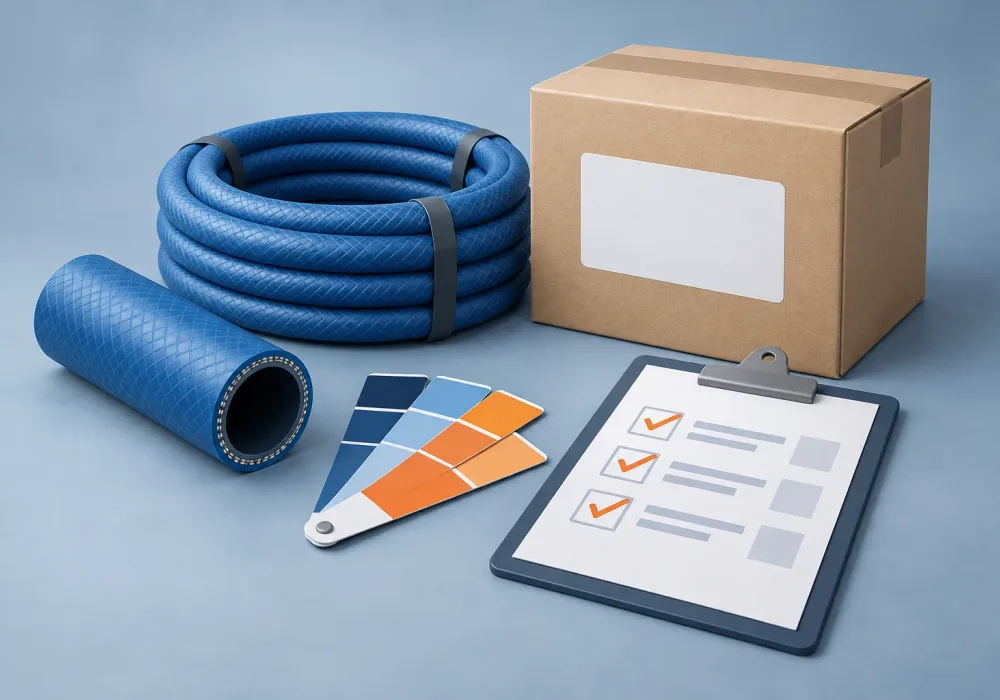
Private label hose sourcing involves more than putting a distributor's name on a product. The product, printed information, packaging and order records need to describe the same approved item.
A clear approval process helps buyers avoid situations where the sample looks correct but the bulk order uses different wording, coil lengths or packaging. It also creates a reference for future replenishment.
1. Define the product before designing the label
Create a product brief that identifies the intended application, medium, size, operating conditions, construction and required documentation. Give each variant your own item reference and ask the supplier to map it to the proposed factory product code.
Keep commercial preferences separate from technical requirements. A brand colour is a preference; an operating requirement determines product suitability. If you want to change a material or construction, ask the supplier to review the effect rather than treating it as an artwork change.
SUNHOSE supplies PVC, hydraulic and rubber hose product families. Review the range before discussing a proposed private label programme:
Explore the SUNHOSE hose range
2. Agree what the sample is intended to prove
Not every sample demonstrates the same thing. A colour sample can support an appearance decision. A printed sample can show text and layout. A product sample identified to an agreed specification can support a defined technical review.
State the purpose of each sample and record any limitations. If a sample uses temporary artwork or different packaging, identify those exceptions. An approval that simply says “sample accepted” leaves too much uncertainty about what was reviewed.
Ask the supplier which checks are available for the proposed item and what evidence can accompany the sample. Any testing or acceptance criteria should be agreed for the intended service and carried out by an appropriately qualified party.
3. Review hose printing as controlled information
Check brand spelling, item references, units, size descriptions and any performance information against the approved product specification. Confirm print colour, placement, repetition and legibility requirements with the supplier.
Only include standards, approvals or certification marks when the wording is supported for the specific product and authorised for use. A logo or claim copied from another catalogue is not evidence that it applies to your item.
Give the artwork a revision number. Keep the approved file with the purchasing record so a later change can be distinguished from the original approval.
4. Approve packaging for receiving and resale
Record coil length, units per package, proposed packaging materials and label content. Ask for package dimensions and gross weights when these are needed for freight planning or warehouse handling. Confirm whether the figures are estimates or final packing data.
A receiving label should help your team identify the item without opening every package. Agree which references will appear, such as your SKU, supplier code, length and batch identification where available. Barcode content should match your own catalogue and inventory system.
If special packaging is requested, ask about availability, minimum quantities, additional cost and its effect on the proposed schedule. These conditions can differ by product and order size.
5. Create a release record for the bulk order
A useful approval record contains:
• Buyer item reference and supplier product code.
• Agreed specification and revision.
• Sample identifier and review purpose.
• Approved artwork and packaging revisions.
• Accepted exceptions or unresolved points.
• Approval date and responsible buyer contact.
Link that record to the purchase order. Ask the supplier to confirm the production basis and notify you before substituting agreed materials, specifications, printing or packaging.
6. Make repeat orders easier to control
For a repeat purchase, refer to the approved revision rather than saying “same as last time.” Confirm whether anything has changed and whether new samples or documents are needed. Retain receiving records so your purchasing team can compare the next shipment with the agreed order basis.
A documented approval process turns a private label project into a repeatable purchasing programme. It supports clearer communication across sales, purchasing, production and warehouse teams.
Planning a branded hose range? Send SUNHOSE your product brief, target quantities, destination market and proposed printing or packaging requirements. Ask which options are available and what needs approval before production:
Send your requirements to SUNHOSE